British Influence on South Africa’s Education

Updated: Jul 10, 2018
By Anna
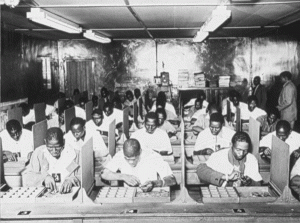
The traditional cultural teachings that members of native African tribes taught their children were swiftly uprooted and denigrated as the white colonization of South Africa began. The Dutch who settled on the Cape originally focused strongly on Biblical teachings and basic literacy and math skills, but with the British takeover education became further divided as tensions rose between the two European nations for control of the land and thus control of the people. War ensued and slowly an emphasis on British values prevailed, but the Afrikaaners still longed for nationals to learn their "native" tongue. The learning environment and curriculum in South Africa is comparable to what Jane experienced in Lowood, with extreme underfunding and little regulation, and little to no meeting the demands of fulfilling any special needs that students may have. As shameful of a facility Lowood was, we can believe that this establishment was far more rigid and beneficial to the needs of the student than were the schools in South Africa, as the low enrollment and little regulation in regards to curriculum in South African schools did not foster a good learning environment.
The devastatingly intense racial divide was existent in schools up until the last few years, and black Africans had little say in what they were learning and how, if they were even able to attend school. As St. John Rivers did in India, British missionaries arrived in South Africa in the hopes of civilizing the natives, and church schools were where black students attended. Flash forward to official Apartheid and the establishment of the Bantu Education Act, the reality that blacks faced is in accordance with how Indian reality was described in Mother India, a reality of “helplessness, hopelessness, and horror.” In addition to the nationally under regulated curriculum or set standard of education, Black students experienced poor conditions, minimal funding, inadequately trained teachers, and eventually the call to have them learn the language of the oppressor because law now demanded that they be taught in Afrikans. The circular dilemma of the attempting to cap knowledge of students who were already purposely under-educated and uninspired is how the White government expected to stay in power and keep the Black students tied to unskilled labor, but eventually this chain would begin to break as students began to take a stand.


References:


Comments